

Running in hot weather is safe for most healthy runners if you go early or late, drink before you’re thirsty, slow your pace and watch for the warning signs of heat exhaustion. The heat doesn’t care about your training plan. Your job is to adjust, not to prove a point.
Here in North Carolina, summer running is a whole different sport. Even 6 am can feel like an oven warming up. So here are our ten essential tips for running in the heat, plus the “why” behind each one.
Why is running in hot weather so much harder?
When it’s hot, your body has two jobs at once. It has to send blood to your working muscles, and it has to send blood to your skin to dump heat.
That split means your heart works harder at the same pace. Add humidity, and sweat doesn’t evaporate well, so you lose one of your best cooling tools. That’s why an easy pace in October can feel like a tempo run in July.
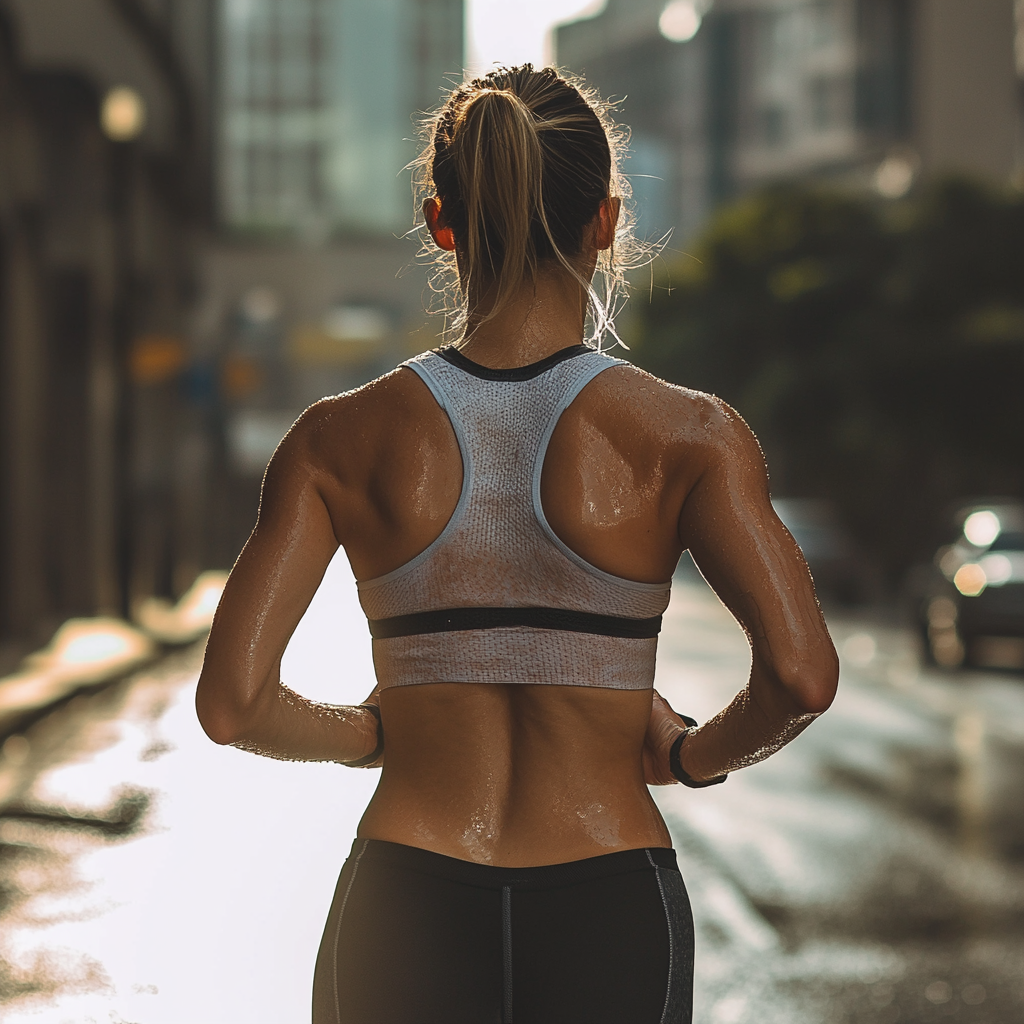
What are the best tips for running in hot weather?
1. Should I pick shaded routes in the summer?
Yes. Pick routes with shade, and if you can, routes that pass water fountains. Running under trees cuts the direct sun on your head and shoulders and makes the whole run more comfortable.
Greenways, park roads and tree-lined neighborhoods are your friends from June through September. Save the wide-open, no-shade loops for cooler months.
2. How much water should I drink before a run in the heat?
Start hydrating well before your run, not five minutes before you walk out the door. Keep sipping water through the day, then keep drinking during the run.
For longer runs in the heat, consider a sports drink with electrolytes. Sweat takes salt with it, and water alone doesn’t replace that. A simple test: if your sweat leaves white streaks on your hat, you’re a salty sweater and electrolytes matter even more.
Don’t overdo it, either. Chugging huge amounts of plain water on a long, hot day can backfire. Drink to stay steady, not to flood the tank.
3. What time of day is best to run when it’s hot?
Early morning or late evening. Those are the “coolest” parts of the day, which makes it easier to stay cool and avoid heat exhaustion.
Midday is the worst choice: highest sun, hottest pavement. Early morning usually wins because the pavement hasn’t soaked up the sun yet. Just know that here in NC, early morning can still come with heavy humidity.
4. What should I wear to run in hot weather?
Lightweight, moisture-wicking running gear. Light colors reflect the sun’s rays, which helps you stay cooler. Skip the cotton. It soaks up sweat, gets heavy and stays wet.
A light hat or visor keeps sun off your face, and good socks help avoid the blisters that come with sweaty feet.
5. Do I need sunscreen for running?
Yes, if you’re out in the sun. Use a broad-spectrum sunscreen with a high SPF to protect your skin from UV rays. Reapply as needed, especially when you’re sweating a lot.
One thing to keep in mind: sunscreen also reduces how much vitamin D your skin makes from sunlight. That’s a tradeoff worth knowing about, not a reason to skip protection on long, exposed runs.
6. How long does it take to get used to running in the heat?
Give your body time to adjust. Start with shorter, less intense runs and build distance and speed as you get used to the heat. Most runners notice it getting easier after a week or two of steady exposure.
And it’s always OK to drop to endurance pace if you HAVE to get a run in. Our rule is simple: Heat + Speed = Bad Things.
7. Should I slow down when running in hot weather?
Yes. Hot weather running is more demanding, so slowing down is the smart move, not the soft one. Listen to your body and don’t push too hard.
Try running by effort instead of by pace. If your normal easy run feels like work, it’s because it is. Let the watch say whatever it wants.
8. Is it OK to take walking breaks?
Absolutely. Walking breaks help you cool down and hold your energy. A minute of walking every so often is a great way to keep from overheating, and plenty of experienced runners use it all summer.
Nobody hands out medals for running every step of a July training run. Finish healthy instead.
9. What cooling gear actually helps?
A cooling bandana or a hat with a built-in cooling feature can make a real difference. You can also run through sprinklers or splash water on your face and neck.
One of our favorite tools is a cooling towel. We got ours at Dick’s Sporting Goods. Soak it, wring it out, drape it on your neck and enjoy the closest thing to air conditioning you’ll get on the road.
10. What are the signs of heat exhaustion while running?
Watch for dizziness, headache, nausea, unusual fatigue, chills or goosebumps in the heat, or suddenly feeling “off.” Any of these can mean heat exhaustion.
If that happens, stop running right away, get into the shade, drink fluids and cool down. Confusion, fainting, or hot skin with no sweat are emergency signs. Call 911.
How do I train for a summer race in the heat?
Put all ten tips together. Run your hard workouts early, keep easy runs truly easy, carry fluids, and expect your times to be slower than in cooler months. That’s normal.
Summer racing in the Lake Norman area is a real thing. The Lake Norman Half Marathon Forest Run runs in June inside Lake Norman State Park, on asphalt roads that wind under a green canopy of trees. That shade helps, but it’s still June in North Carolina. Train for it.
Your summer miles also pay off later. Heat training builds a fitness base that shows up when the weather finally cools down for fall races like the Lake Norman Half Marathon Turkey Trot.
Why does Epic Sports Marketing care about heat safety?
At Epic Sports Marketing we take athlete safety very seriously. We’d rather see you at the start line healthy than read about a heroic training run that ended in the shade with your head between your knees.
So use good common sense and these tips to keep yourself healthy for your fall races. Want something to train for? Check out the full list of Epic races and pick your next start line. You can do this.
Hot weather running FAQ
What temperature is too hot to run outside?
There’s no single number, because humidity, sun and your fitness all matter. When it’s hot and humid, shorten the run, slow down, move it indoors or go early. If you feel unwell, stop.
Should I drink water or a sports drink when running in the heat?
Water works for shorter runs. For longer or sweatier runs, a sports drink with electrolytes helps replace the salt you lose in sweat.
Is it better to run in the morning or evening in summer?
Both beat midday. Morning is usually the better pick because the pavement and air haven’t heated up yet, though humidity can be high.
How do I know if I have heat exhaustion?
Dizziness, headache, nausea, heavy fatigue and chills are common signs. Stop, get to shade, drink and cool down. Confusion or fainting means call 911.
Will running in the heat make me faster in the fall?
Many runners find that steady, smart heat training helps once temperatures drop. The key word is smart: easy efforts, good hydration, no hero workouts.